

Introduction: No Pain, No Gain (Literally)
“What are you looking so miserable about? There’s a whole ocean of oil under our feet!”
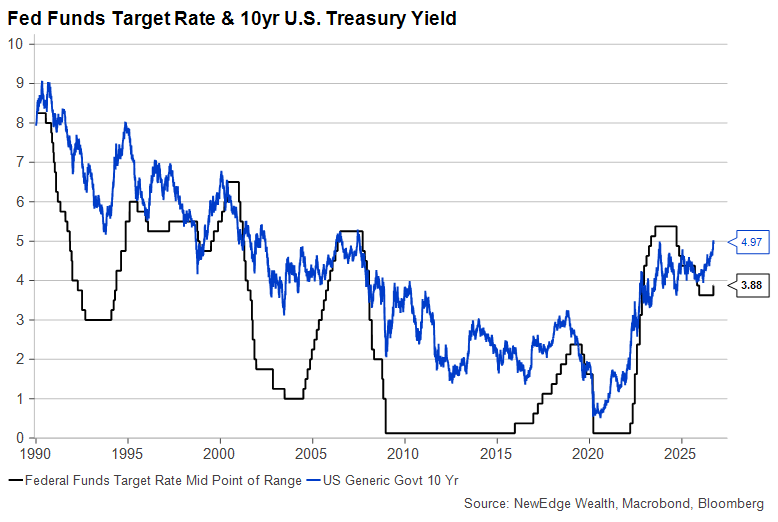
Last week, the Federal Reserve’s Open Market Committee (FOMC) made its first policy move of Chair Kevin Warsh’s tenure, raising its policy target by 25 basis points to 3.75% to 4.00% range. The change did not come as a shock. Bond markets had been pricing in a rate increase well in advance of last week’s meeting, with the 10-year Treasury yield up 1% from its February lows:
As of 9/18/26
What made last week’s move different from prior liftoffs was the lack of guidance about where (and why) rates are likely to move from here. What problem does the economy have that higher interest rates will solve? As we will detail in this piece, the path forward from here is unusually murky.
Fans of director Paul Thomas Anderson will recognize his 2007 opus, There Will Be Blood, as perhaps the most powerful work of his career. Earning Daniel Day-Lewis his second of three Oscars as the imperious oilman, Daniel Plainview, the film’s title promises a gruesome end to a lifelong struggle between two incompatible forces. A spoiler alert for those who still haven’t seen this movie nineteen years after its release: its final moments deliver on that promise.
Navigating the constant struggle between avoiding recession and controlling inflation (while keeping the bloodshed to a minimum) is the Fed’s mandate. The Fed rarely embarks on a serious mission to bring down inflation unless it is willing to inflict some pain on the economy. Whether its efforts to bring down inflation this time will draw blood will depend on how committed the FOMC is to its 2% inflation target and whether the economy is as insensitive to rates as investors seem to think.
What Did the Fed Do?
“Too much confusion! Thank you for your time.”
The Federal Reserve is back to hiking interest rates. While Chair Warsh’s less communicative approach is likely to create greater structural uncertainty going forward, this meeting’s outcome was not in serious doubt. Over the past several months, various Fed officials, including Warsh himself, have laid out inflation benchmarks (some specific and some less so) that need to be met for them to be confident price pressures are easing. After the August CPI and PPI reports both came in hotter than expected, this month’s rate hike was close to a certainty.
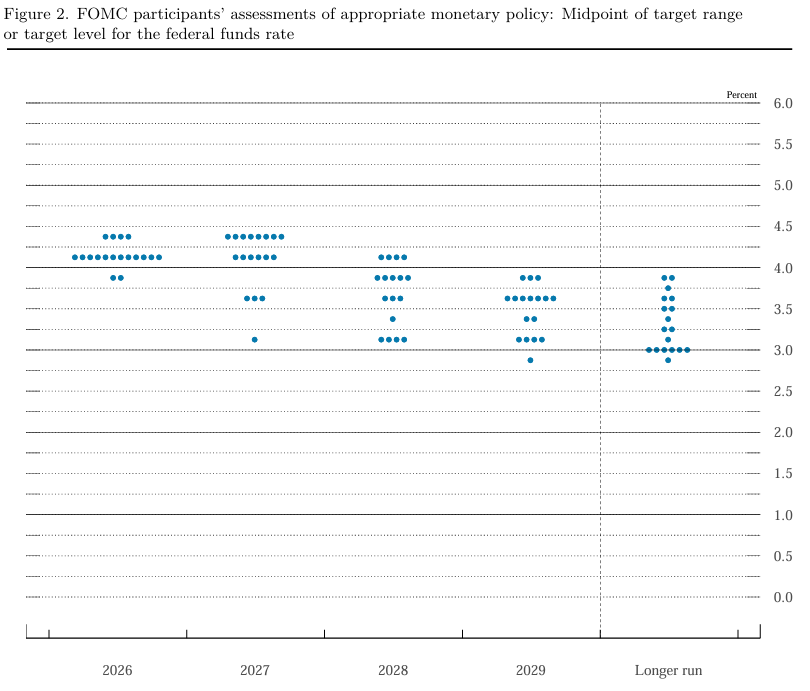
The FOMC’s economic and policy forecast updates (which do not include Warsh’s views) showed stronger growth and labor markets through 2027 and higher inflation in 2026. This makes the decision to tighten policy rather obvious. At the same time, the median FOMC member expects only one more rate increase this year, and most members expect the committee to start cutting rates again in the next few years:
Source: Federal Reserve, as of 9/18/26
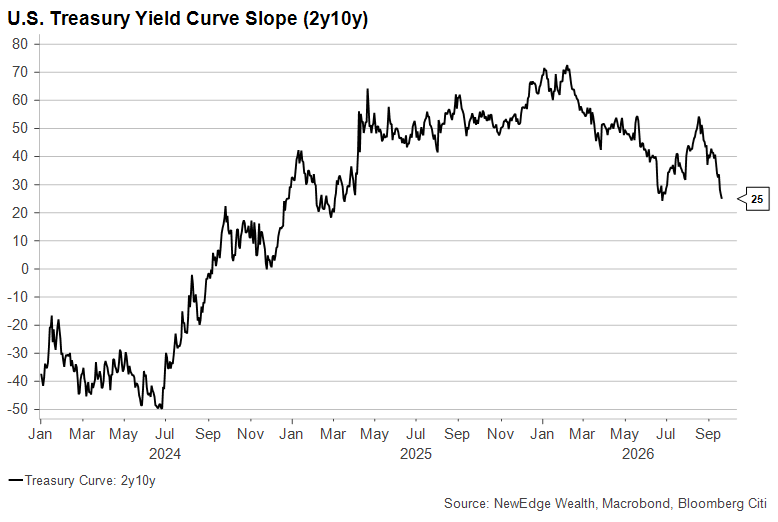
With a day or two of reflection, the market’s reaction to the FOMC meeting has been largely positive. Stocks were shaken on Wednesday afternoon but recovered strongly on Thursday, led by the technology sector, whose earnings growth is perceived to be less cyclical (i.e., susceptible to rate hikes) and more structural than the market’s as a whole. Short-term rates increased as more hikes were priced in, but the longer end of the U.S. Treasury curve stabilized with 10-year rates hovering just below 5%. This flattened the Treasury yield curve, a sign that monetary policy is tightening again.
As of 9/18/26
What Are Rate Hikes Going to Accomplish?
Eli Sunday: Oh, Daniel…Oh, Daniel…please…I-I-I’m in…I’m in desperate times.
Daniel Plainview: I know.
Eli Sunday: I need a friend.
Daniel Plainview: Yes, of course you do.
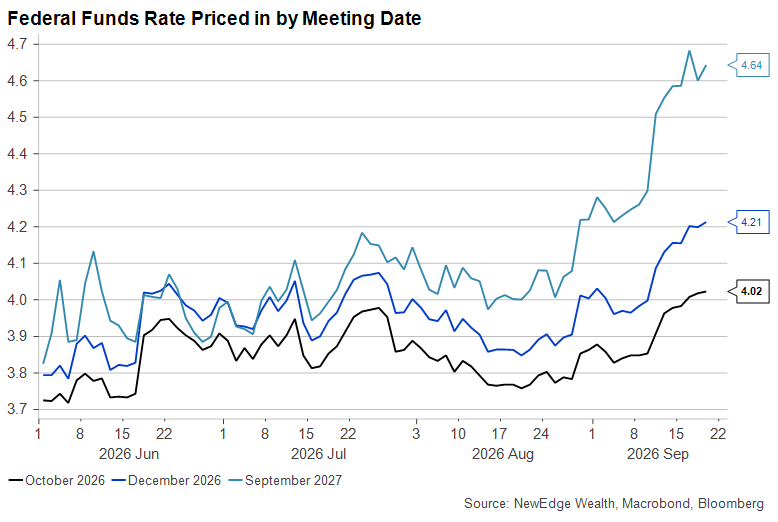
It’s hard to say how a brief and gentle tightening cycle would accomplish the Fed’s goal of bringing down inflation, particularly while the economy is growing above its long-term trend and the labor market is at full employment. Markets are pricing in three more rate hikes over the next year, but nothing close to the move the Fed had to make in 2022 and 2023, when the inflation problem was larger and the labor market was clearly overheating.
As of 9/18/26
The disinflation of 2022-2025 has stalled and partly reversed, mostly for reasons beyond the Fed’s control. Durable goods and energy price inflation remain higher than normal because of tariff policies and geopolitics. If the Fed wants to tighten monetary policy with the goal of fully reducing PCE inflation to its 2% target, it will have to inflict some pain on other economic sectors, specifically those more sensitive to interest rate changes.
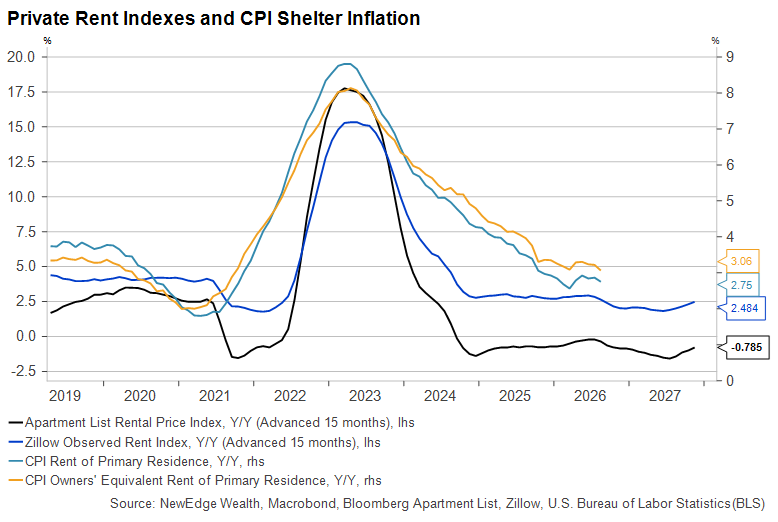
Let’s start with housing, where the yearslong period of rent disinflation is ending. Fed hikes could help prevent a strong rebound in shelter inflation. Higher rates could deter builders from adding to supply and keep homeowners locked into their homes and their low fixed-rate mortgages. But the contribution from this sector to overall inflation is already low.
As of 9/18/26
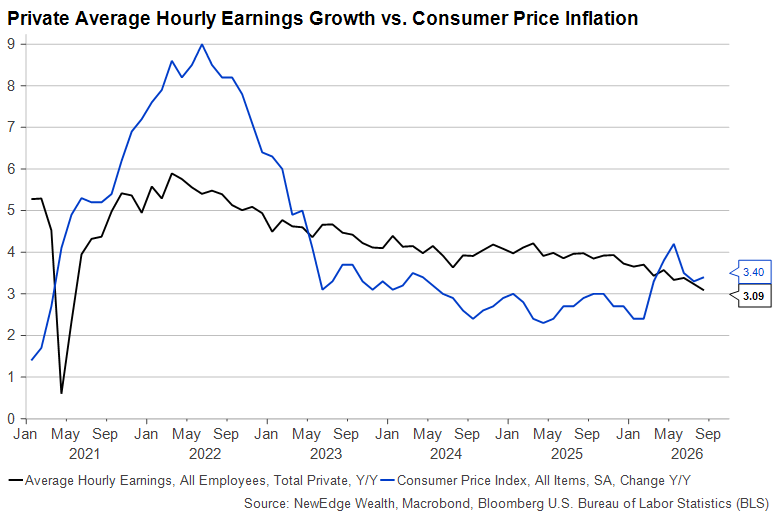
Fed hikes could also soften the labor market if they disincentivize hiring. But wage growth, a good gauge of the balance of power between workers and employers, has already been decelerating for years. In fact, it has failed to keep pace with inflation for most of 2026:
As of 9/18/26
Lastly, rate hikes could tighten financial conditions, sending corporate bond spreads higher and bringing equity market valuations lower. This transmission method would be even more effective if it were to dampen the wealth effect (consumers spending more as their financial asset prices rise), but it would arguably be the most painful way to lower inflation. Nothing in the Fed’s forecasts or public commentary tells us this is a path they want to go down.
Is “Immaculate Disinflation” Possible?
“I am the third revelation! I am the third revelation!”
Of course, the true “bull case” for markets from here is that inflation comes down gently without any of the offsetting weaknesses in growth we mentioned above. Believers in this “immaculate disinflation” phenomenon expect inflation to ease without the pains of weaker growth and higher unemployment. And they can credibly point to the last cycle as evidence it can happen.
We see important differences between the economic environment in the prior tightening cycle and the one the Fed faces today. First, the one-off shocks of the post-COVID reopening and stimulus and the supply chain bottlenecks they created were not the Fed’s doings, but the price pressures they generated would likely have dissipated with or without rate hikes. Second, the wave of migration into the U.S. dramatically expanded the labor force at a time when workers reported historic difficulties in filling open jobs. Third, households had amassed considerable savings that they could deploy to offset the economic effects of higher interest rates on their cash flows. Fourth, residential construction growth was white hot in 2021 and 2022, creating the new supply needed to control rent inflation in fast-growing areas of the country like Texas and Florida.
Are there similar forces at work today to help the economy achieve another “immaculate” outcome? The most obvious candidate is oil prices and the wider energy sector. There Will Be Blood is loosely based on “Oil!”, the Upton Sinclair novel, and oil plays a key thematic role in both the film and the current market environment. A swift resolution to the Iran conflict and freer flow of oil through the Strait of Hormuz could undo much of the inflationary damage of the past six months. We will leave it to military and diplomatic experts to say whether such a resolution is likely anytime soon, but commodity futures markets have been too sanguine all along about the impact the conflict could have on oil prices.
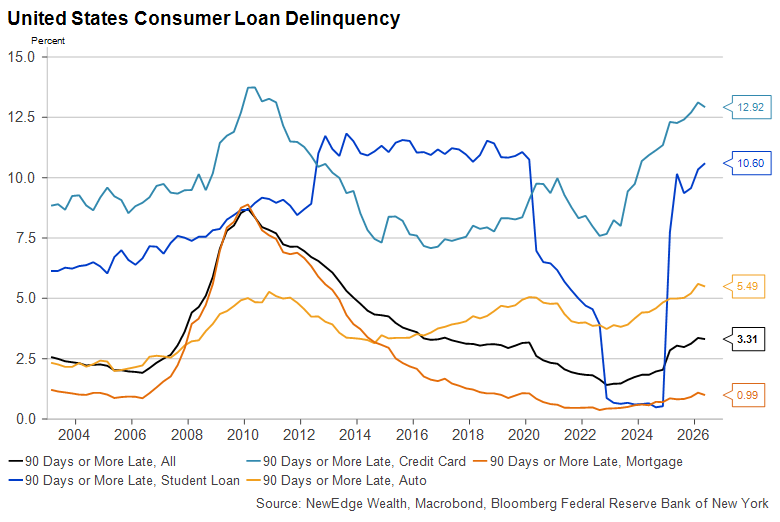
Second, while many households retain an ability and willingness to spend (drawing on their higher wealth or the credit such wealth unlocks), a growing number of households are falling into delinquency on their loans. This suggests that even a small upward move in rates could do more economic damage for households under financial stress.
As of 9/18/26
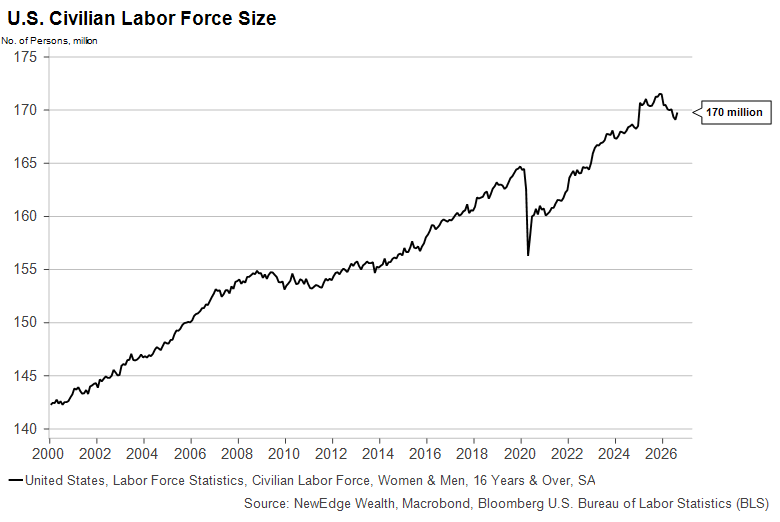
Third, unlike the years from 2022 to 2024, the U.S. labor force has been shrinking thanks to Baby Boomer retirements and a sharp reversal in net migration. This normally does not happen outside of recessions:
As of 9/18/26
Lastly, data for new home construction continues to come in historically weak, telling us that any further moderation in shelter inflation likely needs to come from softer demand. A higher supply of homes is not arriving anytime soon.
We do not see the same helpful confluence of factors that helped the economy avoid recession in 2024 returning to assist in 2027. If anything, the tailwinds that pushed us toward that first happy ending have turned into headwinds. This means one of two things is true. Either rate hikes will have a more negative effect on growth than they did in the prior cycle, or they will be insufficient to meaningfully bring down inflation. We highly doubt the Fed currently has the will or the desire to meaningfully slow the economy and crush inflation. This could mean inflation stays elevated (in the 3% to 3.5% range) for the near term, and it introduces a greater risk that the Fed could be seen at some point as falling behind the curve.
Conclusion: Bonds for a Hiking Cycle?
“What’s this? Why don’t I own this? Why don’t I own this?”
If there’s good news about the inflation risks we outlined above, it’s that investors are finally being well compensated for taking them. In fact, as interest rates have risen sharply from their late February bottoms, we have become more constructive on bonds. Taxable equivalent yields for municipal bonds currently exceed those on investment-grade corporate bonds even though historical default rates on municipal bonds have been lower than on corporate bonds.
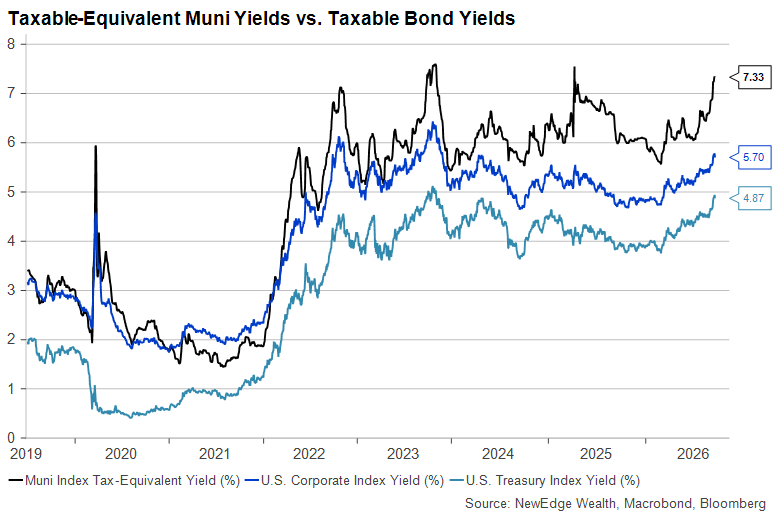
As of 9/18/26; Assumes all-in federal tax rate of 40.8%
If Fed rate hikes significantly weaken the economy, either by accident or by design, we think interest rates would fall, and bonds would be among the best performing asset classes. But even without any positive price appreciation or correlation benefit, bonds’ current coupons make them competitive with riskier assets like stocks. We caution against using valuation as the sole basis for making investment decisions, as valuation metrics are not reliably predictive of short-term performance. But the long-term return outlook for bonds rivals that of stocks for the first time in 25 years:
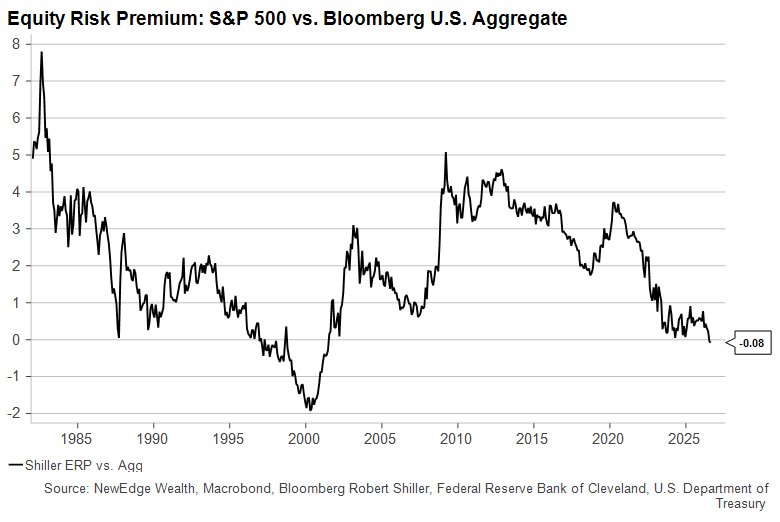
As of 9/18/26
We were encouraged by the stability at the long end of the yield curve following the rate hike last week. As we pointed out in the introduction, long-term yields often reflect what the Fed is going to do before it does it. Absent a major positive inflation shock – or a surprisingly hawkish turn from the Fed – we see rates across the middle to longer end of the curve as likely close to their peaks.
Those who took this week’s There Will Be Blood theme literally may be expecting a shocking and violent ending to this piece. We’re sorry to disappoint. In truth, we remain constructive on the economy and the investing environment across a wide array of both public and private markets. A short and shallow hiking cycle, even if it ends with inflation still above target, should be fine for corporate earnings and keep valuations supported at current levels. But investors should pay attention to how they’re being compensated for taking various types of risk. It may be a good time for investors whose portfolios have fallen out of balance in the 2020s to revisit their strategic targets, consider their cash flow needs, and add to fixed income.
IMPORTANT DISCLOSURES
The views and opinions included in these materials belong to their author and do not necessarily reflect the views and opinions of NewEdge Capital Group, LLC.
This information is general in nature and has been prepared solely for informational and educational purposes and does not constitute an offer or a recommendation to buy or sell any particular security or to adopt any specific investment strategy.
NewEdge and its affiliates do not render advice on legal, tax and/or tax accounting matters. You should consult your personal tax and/or legal advisor to learn about any potential tax or other implications that may result from acting on a particular recommendation.
The trademarks and service marks contained herein are the property of their respective owners. Unless otherwise specifically indicated, all information with respect to any third party not affiliated with NewEdge has been provided by, and is the sole responsibility of, such third party and has not been independently verified by NewEdge, its affiliates or any other independent third party. No representation is given with respect to its accuracy or completeness, and such information and opinions may change without notice.
Investing involves risk, including possible loss of principal. Past performance is no guarantee of future results.
Any forward-looking statements or forecasts are based on assumptions and actual results are expected to vary from any such statements or forecasts. No assurance can be given that investment objectives or target returns will be achieved. Future returns may be higher or lower than the estimates presented herein.
An investment cannot be made directly in an index. Indices are unmanaged and have no fees or expenses. You can obtain information about many indices online at a variety of sources including: https://www.sec.gov/answers/indices.htm.
All data is subject to change without notice.
© 2026 NewEdge Capital Group, LLC
The post Will There Be Blood? appeared first on NewEdge Wealth.


